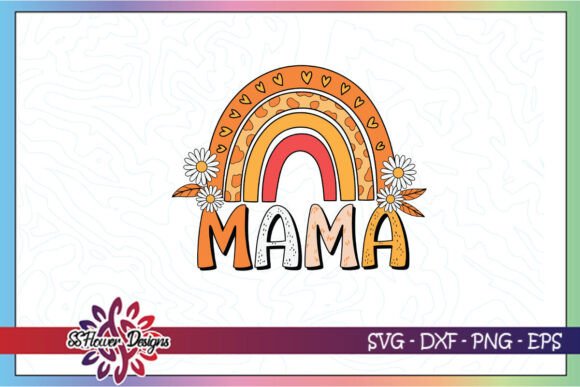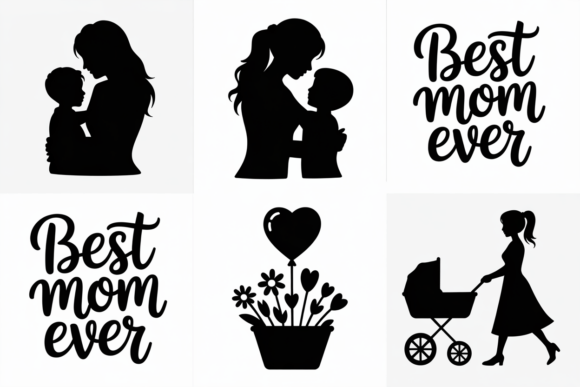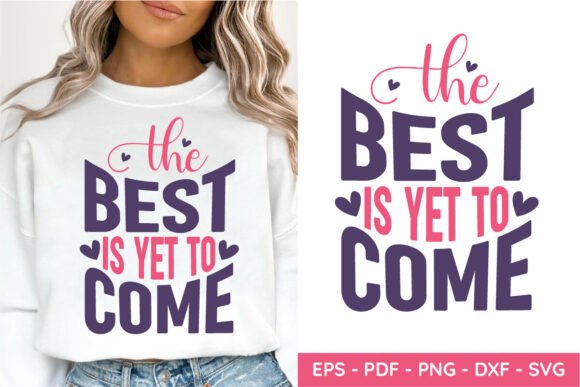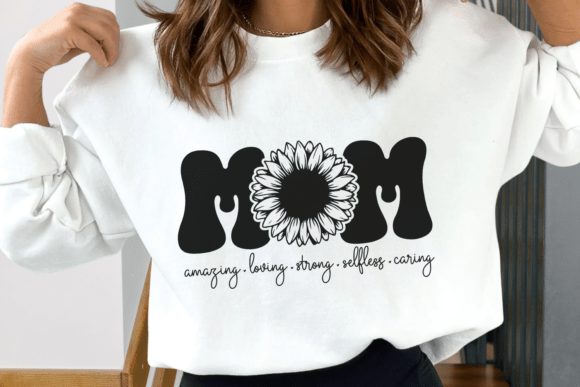
Happy Mother s Day, Mom T-shirt SVG
When a design lands in my hands for an embroidery project, I don’t look at it as a pretty picture. I look at it as a stitching puzzle. The Happy Mother s Day, Mom T-shirt SVG arrived in my workflow during a busy week of preparing Mother’s Day stock for three small shops, and I immediately saw both its warmth and its practical edges. The file set includes an SVG, a high-resolution PNG with transparent background, and an EPS—all standard for cutting machines. But my brain instantly translates those into threads, hoops, and stabilizer. This isn’t a pre-digitized embroidery file, and that’s a crucial first note. It’s a graphic asset that asks you to be both a designer and a maker. If you’re comfortable with digitizing or working with a converter, this design has a lot of heart and strong commercial potential. If you’re expecting a ready-to-stitch download, you’ll need to pause and adjust your expectations.
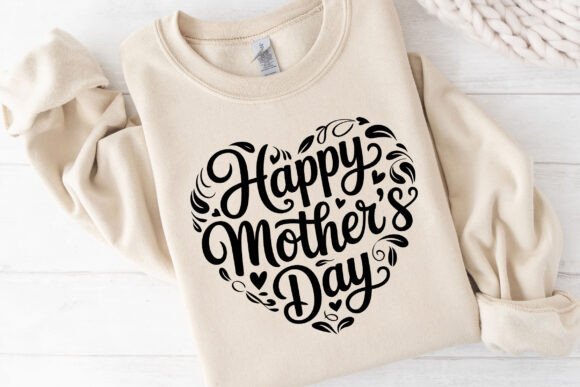
My first impression was shaped by the mood of the phrase. “Happy Mother s Day, Mom” feels personal and direct, not overly ornate or generic. The lettering style—flowing with a handwritten or script-like personality—creates a soft, emotional pull. That’s exactly what customers want on a handmade gift. I could already picture it on a light oatmeal-colored sweatshirt, stitched in a dusty rose thread, or on a natural canvas tote bag with a delicate floral accent. The design feels like it belongs in a boutique, not a big-box store. That’s valuable for craft businesses and Etsy sellers who need to stand out.
What the Design’s Personality Tells Me About Embroidery Potential
The typography has gentle curves and a balanced rhythm. There’s no overcrowding, and the word “Mom” has a natural emphasis that makes it instantly giftable. When I assess a design for embroidery, I look at the negative space, the stroke thickness, and the join points. This SVG holds up well under that scrutiny. The lines are clean, the connections are smooth, and the overall shape is compact enough to fit a standard 4x4 or 5x7 hoop without losing detail. That’s a big plus for at-home embroidery setups and single-head commercial machines. The lettering doesn’t have tiny, fragile serifs that would collapse under satin stitches, and the spacing between characters allows for a comfortable stitch width of 2.5 to 3.5 millimeters. Even on a slightly textured fabric like a linen pillow cover, the letterforms would likely read clearly if digitized with care.
I ran a mental test on a black mockup. The script’s weight is sufficient to hold its own on dark fabric, but you’ll need to be thoughtful about thread color. A metallic gold or a soft cream thread would keep the contrast high while preserving the tender message. On white or pastel backgrounds, a darker thread like navy or charcoal can give it a crisp, modern edge. The design’s versatility across fabric colors is a strong selling point for anyone listing multiple product variations in their shop.
Real Project: A Custom Sweatshirt Order That Made Me Think Twice
Let me walk you through a real scenario. A client asked for a personalized Mother’s Day sweatshirt with this exact phrase and a small floral accent. She wanted it on a heathered mauve crewneck, size medium, with a hoop size limit of 4x4. The Happy Mother s Day, Mom T-shirt SVG became the centerpiece. I imported the SVG into my digitizing software, checked the path smoothness, and mapped out the stitch types. The main “Happy Mother s Day” part fit beautifully into a single-line satin stitch, while “Mom” needed a slightly wider satin with a running stitch underlay to prevent sinking on the plush fabric. The PNG file with transparent background was a lifesaver for creating a quick client mockup before I even digitized a single stitch. That alone saved me an hour of back-and-forth.
The final digitized version stitched out in about 9,000 stitches on a sturdy cutaway stabilizer. The design sat proudly on the chest, and the client’s reaction told me everything: she saw the love in the piece. That’s the kind of emotional delivery a good graphic design supports. The EPS file also came in handy when I needed to resize the design for a matching infant onesie. The vector art scaled without distortion, and I could quickly create a smaller, lighter stitch file for a delicate baby garment. This multi-use flexibility is a quiet, powerful feature of the file package.
Where This Design Shines Across Product Types
I’ve mentally placed this design on over a dozen products. A heavyweight cotton apron with a bottom-right embroidery placement feels like a natural fit for a kitchen gift. A simple, unbleached tea towel with the design stitched in a soft olive thread leans into the handmade, farmhouse aesthetic. For tote bags, I’d recommend a centered placement on the front pocket—it frames the message beautifully without overwhelming the bag. The design also works for canvas zipper pouches, quilted pillow covers, and even a soft patch sewn onto a denim jacket. The key is matching the project’s tone to the design’s gentle, celebratory vibe. It’s not a loud, comic-style graphic; it’s a quiet statement of appreciation. That means it suits Mother’s Day, but also birthdays, anniversaries, or just-because gifts.
For sellers, this design can anchor a cohesive product line. You could pair it with a coordinating floral SVG or a simple heart motif, creating a collection that feels curated. The transparent background PNG is perfect for digital mockups, letting you place the design on lifestyle photos without awkward white boxes. This is a huge trust-builder for online listings—customers can see exactly how the embroidery will look on a hoodie or a baby blanket before they click “buy.”
Practical Caution Zones for Embroidery Projects
Every design has its fragile spots, and this one is no exception. The most delicate area is the comma after “Day” and the apostrophe in “Mother s”. If your digitizing software doesn’t handle tiny punctuation well, those characters can turn into a dense knot or lose definition on napped fabrics. I always test these small elements on a scrap of the actual project fabric before committing. On stretchy t-shirts, the lettering might pull or distort if you don’t use a proper no-show mesh stabilizer and temporary adhesive. I’d avoid placing this design directly over a seam or on a highly textured terry cloth, where the thin parts of the script could disappear into the pile.
Hoop size is another factor. While the design can fit a 4x4 hoop, the lettering won’t be large. If you go smaller than 3.5 inches wide, the word “Mother” might become too dense and lose its airy feel. I recommend keeping the design width at least 3.8 inches for a clean stitch definition. On caps, the curved surface demands careful placement—the design works best on the side or back of a cap rather than the front, where the lettering might bend awkwardly over the center seam. Baby items need extra attention: the soft, thin fabric of a onesie requires a lightweight fill stitch and a soft backing to avoid irritation. Always think about the wearer’s comfort when transferring a graphic to thread.
Notes on File Types and What You’re Actually Getting
Let’s be clear about what you receive: an SVG, a 300 DPI PNG with a transparent background, and an EPS. These are Graphics assets, not embroidery files. They are perfect for Cricut, Silhouette, and other cutting machines, as the description states. But for embroidery, you’ll need to digitize the design yourself or use a conversion service. The SVG is a vector path, which is ideal for digitizing software because it preserves smooth curves and sharp corners. The PNG is useful for mockups, print-then-cut hybrid projects, or as a reference image. The EPS is a bonus for those who work with older software or need a scalable vector for very large formats. If you’re a craft business owner selling finished embroidered products, you’ll appreciate having multiple file types to support your workflow—from design preview to final stitch.
Before you use this design in any commercial project, please check the licensing terms. The description doesn’t explicitly state whether commercial use is allowed, and that’s a conversation you need to have with the seller. I always recommend reaching out to confirm you can sell items with the design, especially if you’re planning to list on Etsy or at craft fairs. A quick permission check can save you from a headache later.
How This Design Shapes Customer Perception and Product Value
When a customer unboxes a handmade item, the embroidery is often the first thing they touch. The Happy Mother s Day, Mom T-shirt SVG translates into a message that feels personal and handcrafted. It doesn’t look mass-produced. That immediately elevates the perceived value of a tote bag, a sweatshirt, or a nursery decor piece. The script’s gentle flow invites a smile, and that emotional connection is what turns a one-time buyer into a repeat customer. I’ve seen shops build an entire Mother’s Day collection around a single, well-chosen phrase, and this design has that anchor quality.
Brand consistency also benefits from using a design with a clear, recognizable style. If your shop leans toward minimalist, heartfelt gifts, this SVG fits right in. It’s not trendy in a way that will feel dated next year; the sentiment is timeless. For those who offer personalized embroidery, adding a name or a short date beneath the main design is easy to do with the template, and it opens up a higher price point. The design’s balanced composition leaves room for such custom touches without crowding.
Final Embroidery Designer’s Checklist Before You Stitch
Over the years, I’ve learned that a successful embroidery project starts long before the needle hits the fabric. Here’s a quick mental checklist I run through with any graphic design I’m about to digitize:
- Open the SVG in your digitizing software and inspect the nodes. Simplify any overly complex paths that could cause unnecessary trims or jumps.
- Test the design in black and white to see if the tonal value holds up. The PNG is great for this quick check.
- Choose thread colors that contrast well with your fabric but still feel gentle. A high-contrast neon thread would ruin the soft mood of this design.
- Stitch a sample on a fabric scrap that matches your final product. Pay special attention to the apostrophe and comma: do they read clearly?
- Use a cutaway stabilizer on knits and a tear-away on sturdy wovens. Adjust stitch density based on fabric thickness.
- If you’re selling the finished product, have a clear photo of the embroidery on a real item. The mockup you created with the PNG can help in the listing, but an in-situ photo builds extra trust.
- Double-check that your commercial use aligns with the seller’s license. If in doubt, ask.
The Happy Mother s Day, Mom T-shirt SVG is more than a cutting file. It’s a heartfelt design that, when handled with a little digitizing skill, turns into a stitch-out that customers will treasure. It fits beautifully into the Crafts space, serving as a bridge between digital art and tangible, sewable products. Whether you’re making a single personalized gift for a family member or stocking a small shop with Mother’s Day bestsellers, this design earns its place in your library. Just remember to treat it as a starting point, not a finished embroidery file, and your creative instincts will take it the rest of the way.
I’d reach for this design again without hesitation—for a linen apron, a nursery pillow, or a soft-script patch on a cardigan. It’s the kind of asset that reminds me why handmade products matter: because they carry messages that feel real, sewn one thread at a time.