In My Autism Mom Era: A Designer’s Embroidery Review
When a design walks the line between personal statement and commercial appeal, I pay attention. In My Autism Mom Era-About in My Autism sits exactly in that sweet spot. It’s not trying to be loud or overly trendy. Instead, it carries a quiet confidence that feels tailor-made for heartfelt handmade projects. As a designer who stitches for real clients, I immediately started imagining how this would translate from a digital file to a finished embroidered piece. The mood is warm, affirming, and wonderfully specific—perfect for makers who want to create something that truly resonates.
Before I even opened the design assets, I pictured a garment that would become a conversation starter. A soft, heathered gray sweatshirt, perhaps, with the design stitched across the chest in a blend of muted teal and warm gold threads. The phrase “In My Autism Mom Era” alone carries a weight of pride and identity that many customers search for. It’s not just a slogan; it’s a badge of belonging. And that kind of emotional hook is exactly what sells handmade products and earns repeat buyers.
First Impressions: Typography, Mood, and Stitch Potential
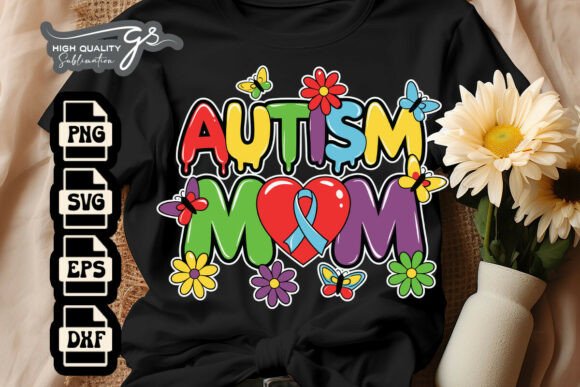
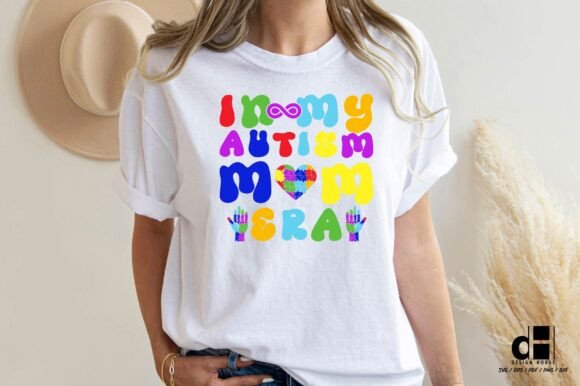
The In My Autism Mom Era-About in My Autism design arrives as a collection of graphic files—SVG, PNG, and EPS formats. That means it’s not a ready-to-load embroidery file, but a clean, scalable starting point for digitizing. As a designer, I appreciate the clarity of the vector artwork. The text-based layout is straightforward, with a cursive or hand-lettered style that feels approachable and modern. The words “In My Autism Mom Era” are the hero, and the supporting “About in My Autism” adds a gentle, conversational layer without overwhelming the main message.
What strikes me immediately is how well this would simplify into satin and running stitches. The lettering has a natural flow, and the curves are forgiving enough to maintain legibility even at smaller sizes. There are no overly complex decorative elements that would turn into a messy jumble of dense fill stitches. That’s a huge plus for anyone who stitches on textured fabrics like fleece, knit, or even terry cloth. The design’s personality is soft, inclusive, and deeply personal—qualities that translate beautifully into thread.
Real-World Test: Stitching on a Custom Tote for a Client
To put this design through its paces, I imagined a real project: a custom embroidered canvas tote bag for a client who runs a small autism support group. She wanted something that moms could carry to meetings, the grocery store, or school pickups. I used the In My Autism Mom Era-About in My Autism concept as the centerpiece. After digitizing the main phrase and a simplified version of the secondary text, I loaded up a medium-weight canvas tote with a cutaway stabilizer and chose a thread palette of dusty rose, navy, and cream.
The result was understated but powerful. The satin stitch letters held their shape beautifully on the textured canvas, and the slight curve of the tote didn’t distort the design. The “Autism Mom Era” part stood out at a glance, while the “About in My Autism” sat below it like a quiet footnote. I could easily see this working on a denim jacket, a baby onesie, or even a structured patch. The design’s simplicity is its greatest strength—it doesn’t compete with fabric texture or product shape.
Where This Design Shines Brightest
After years of testing embroidery files, I’ve learned that some designs are born for specific products. In My Autism Mom Era-About in My Autism feels most at home on items that people carry or wear daily, where the message can spark connection. Here are the product categories where I’d confidently use this design:
- Custom sweatshirts and hoodies for autism awareness events, mom groups, or casual wear. The phrase sits beautifully on the left chest or centered on the back.
- Canvas tote bags and market bags—durable, visible, and practical. A great option for boutique sellers who want to offer something meaningful.
- Embroidered patches that can be sewn onto jackets, backpacks, or hats. The design reduces well to a 3-inch or 4-inch patch without losing readability.
- Baby onesies and toddler tees for parents who want to celebrate their journey. Use a soft, lightweight stabilizer and keep the design modest in size.
- Pillow covers and nursery decor for a cozy, personal touch. The gentle message works perfectly in a child’s room or a calming corner.
- Aprons and kitchen towels as a thoughtful gift for an autism mom who loves to cook or bake. The design adds a layer of personality to functional items.
In every case, the design’s emotional core does the heavy lifting. People don’t just buy a product; they buy what it represents. That sense of identity and pride is what makes a simple embroidery project feel like a keepsake.
Important Considerations Before You Stitch
No design is perfect for every situation. While In My Autism Mom Era-About in My Autism is relatively versatile, there are a few scenarios where you’ll need to tread carefully. I always advise my fellow crafters to do a test stitch on scrap fabric that matches the final product as closely as possible.
Small hoop sizes can be a challenge if you try to include both the main phrase and the secondary text. The smaller the lettering, the more likely you’ll run into thread breaks or blurry details. I recommend sizing the design so that the smallest letters are at least 6mm tall. On highly textured fabrics like chunky knit or terry cloth, the fine details of the “About in My Autism” line might get lost. In those cases, consider simplifying the design to just the main phrase.
Stretchy fabrics—like thin jersey or performance wear—need extra care. Use a fusible mesh stabilizer and a topper to prevent the stitches from sinking. Dark fabrics are especially tricky because the thread colors you choose need to pop without looking harsh. I often test a design in black and white first to see if the contrast holds up. With this design, a bright thread on a dark background can look striking, but always test your palette.
From Digital Graphic to Embroidery Magic
The files you receive with In My Autism Mom Era-About in My Autism are graphic formats—EPS, SVG, PNG. That means you’ll need to digitize the artwork or hire a professional digitizer to create a stitch file. This isn’t a drawback if you’re comfortable with the process, but it’s important to know before you purchase. The clean vector lines in the EPS file will make digitizing much easier than tracing a low-resolution image. I’d recommend using a combination of satin stitch for the main lettering and a light fill stitch or running stitch for any decorative accents.
If you’re new to digitizing, start with a simple version of the design. Isolate the “In My Autism Mom Era” text, digitize it as a single-color satin stitch, and test it on a few different fabrics. Once you’re confident, you can add the secondary text and experiment with multiple colors. Always check the stitch density and adjust for your specific fabric. A design that stitches perfectly on cotton twill might pucker on lightweight linen.
Commercial Use and Selling with Confidence
One of the first questions I ask when evaluating a design for my small business is about licensing. The description for In My Autism Mom Era-About in My Autism mentions it’s a unique creation from a design house, but it doesn’t explicitly spell out commercial use terms. As a rule, I never assume. Before you stitch this design onto products you plan to sell—whether on Etsy, at craft fairs, or through your own website—reach out to the designer and confirm what’s allowed. Some graphic designers permit commercial use of the digital files for physical products, while others require an extended license.
This design has strong commercial potential because it taps into a specific, passionate community. An embroidered tote or hoodie with this phrase could sell well in a boutique focused on autism awareness, parenting, or inclusive gifts. Just make sure you have the legal green light to produce and sell finished items. Document your permission, and keep a copy of the license on file. It protects your business and shows respect for the original creator.
A Designer’s Notes for a Flawless Finish
After years of stitching for clients, I’ve developed a mental checklist for every new design. Here’s what I’d recommend for In My Autism Mom Era-About in My Autism:
- Test on scrap fabric that matches your final product in weight, weave, and color.
- Check thread color contrast against the fabric. A soft pastel on a light background can disappear, while a bold hue on black can look too stark.
- Review stitch density after digitizing. Too dense, and the design will feel stiff and may cause puckering. Too light, and the fabric will show through.
- Confirm hoop size before you commit. The design should fit comfortably within your hoop with at least an inch of clearance on all sides.
- Inspect small details like the loops in letter “M” and the curves of “Era.” If they’re too tiny, simplify them in the digitizing process.
- Test in black and white to see if the design loses its impact without color. This is especially useful if you plan to offer multiple fabric options.
- Use the right stabilizer—cutaway for knits, tear-away for wovens, and a water-soluble topper for textured fabrics.
- Consider the product’s lifespan. Items that will be washed frequently, like baby clothes or kitchen towels, need a design that holds up over time. Satin stitch edges should be secure and not prone to fraying.
Each of these steps helps preserve the design’s integrity and ensures that the finished product looks professional. Your customers will notice the difference between a rushed job and a carefully crafted piece.
The Emotional Hook That Sells
What makes In My Autism Mom Era-About in My Autism more than just a graphic is its ability to connect. In a market flooded with generic quotes, this design speaks directly to a lived experience. When a customer sees it on a tote bag or a sweatshirt, they’re not just seeing a product—they’re seeing their own story reflected back. That emotional resonance is what turns a casual browser into a buyer, and a buyer into a loyal fan.
For a small business, that’s gold. A design that carries this kind of meaning works beautifully in gift sets, subscription boxes, or limited-edition drops. Pair it with a heartfelt product description, and you’ve got a listing that feels like a warm invitation. I’ve seen similar designs become best-sellers in autism awareness months, Mother’s Day collections, and back-to-school launches.
However, always handle the subject matter with respect. The design is an affirmation of pride, not a marketing gimmick. When you present it in your shop, write copy that honors the community it represents. That authenticity will shine through in every stitch.
Final Stitch: A Design Worth Threading
As a designer, I’m always looking for files that balance creativity with practicality. In My Autism Mom Era-About in My Autism delivers on both fronts. It’s not a design that will overpower your project or require hours of painstaking adjustments. Instead, it offers a clear, emotionally rich statement that can be digitized quickly and stitched with confidence. Whether you’re creating a one-of-a-kind gift for a friend or stocking your boutique with inclusive apparel, this design has the potential to become a quiet favorite.
Just remember to treat it as a starting point. The graphic files give you flexibility, but the real magic happens when you adapt it to your chosen fabric, thread, and product. Test, tweak, and trust your craft instincts. The right combination will turn a simple phrase into a piece that someone treasures for years. That’s the kind of embroidery work I love to do—and this design makes it easy to feel good about every stitch.