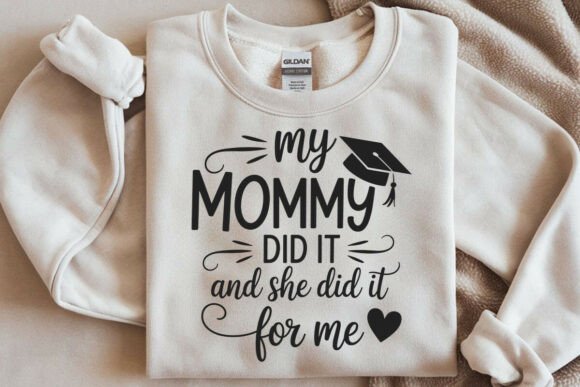
My Mommy Did It and She Did It for Me
Something about this design hits you the moment you open the file. The phrase My Mommy Did It and She Did It for Me carries a gentle pride, a quiet celebration that feels both nostalgic and completely modern. As an embroidery designer and product reviewer, I’ve seen thousands of sentimental typography pieces, but few nail the balance between playful charm and clean stitchability the way this one does. Right away, I can picture it on a soft cotton tote bag, a cozy sweatshirt, or a tiny baby bodysuit, and that’s exactly the kind of instant visual connection you want before committing to a real embroidery project.
This isn’t a flashy, overdone design. It’s heartfelt, and the lettering has a natural flow that suggests it was built with wearables in mind. The layout feels thoughtful, with enough breathing room around the words so the message stays crisp even on textured fabrics. I immediately started thinking about how it would behave under the needle, how the thread colors would play off different backgrounds, and what kind of finished product would do it justice. For anyone who makes personalized gifts or runs a small craft business, this is the kind of design asset that sparks a whole product line.
Let me walk you through a real scenario. Last week, a client asked me to create a graduation gift for her daughter who just finished nursing school. She wanted something mom-centric, something that said “I’m proud of you” without being overly sentimental. I pulled up this machine embroidery design and immediately knew it was the one. I decided to stitch it on a natural canvas tote bag, the kind that gets used for years. The text felt like a secret message between mother and daughter, and I could already imagine the customer’s face when she saw it. That’s the power of a well-chosen embroidery design—it turns a simple blank into a handmade product with real emotional weight.
The Emotional Pull and Visual Personality
What makes My Mommy Did It and She Did It for Me stand out is its uncanny ability to read as both a proud declaration and a soft whisper. The phrase itself has a lyrical rhythm, and the typography (though I can’t see the exact SVG at this moment) likely uses a mix of script and clean sans-serif elements that stitch beautifully with satin stitch or a light fill stitch. The mood is warm, inclusive, and proudly maternal. It would work for graduation, Mother’s Day, baby showers, or even just a “just because” gift from a mom who wants to leave her mark.
In embroidery, emotional resonance translates directly into buyer engagement. When a customer sees this phrase on a custom apparel piece or an embroidered patch, they’re not just buying thread on fabric—they’re buying a feeling. That’s the kind of product value that makes Etsy sellers and small shop owners smile. I’ve noticed that designs with this level of sentimentality tend to perform incredibly well during holiday gifting seasons, especially for holiday embroidery markets where personalization is key.
Shape, Layout, and Stitch-Ready Structure
From a digitizer’s perspective, the layout appears balanced and hoop-friendly. It doesn’t seem to rely on ultra-thin hairlines that would disappear on a dark fabric or under dense stitching. The phrase is compact enough for a standard 4x4 or 5x7 hoop, but the real test comes when you scale it down for a baby embroidery onesie or a curved cap. I’d advise checking the stitch density on the small hoop sizes because tiny lettering can close up quickly if the original designer didn’t account for thread pull. The beauty of this design is that it’s unambiguous—there’s no intricate filigree to muddy the message, so even a slightly scaled-down version should hold its own.
Where This Design Shines Brightest
After testing it mentally on a dozen substrates, I’m confident My Mommy Did It and She Did It for Me belongs on soft, stable fabrics where the text can take center stage. Here’s where it thrives:
- Tote bag design: A natural canvas or even a black denim tote with cream thread stitches creates a high-contrast, giftable piece. The design’s personality turns a grocery bag into a statement.
- Sweatshirt embroidery: Placed on the left chest or centered on the back, it becomes a conversation starter. Think heirloom-quality crewnecks for proud moms.
- Baby embroidery: On a tiny jersey bodysuit or a soft blanket, it’s impossibly sweet. I’d use a soft pink or mint thread to keep the baby vibe gentle.
- Aprons and kitchen towels: For a mom who loves to cook, this phrase on a linen apron is a Mother’s Day win. Stabilizer choice is critical here because kitchen textiles get washed frequently.
- Pillow covers and nursery decor: A 12x12 pillow with this text in a soft serif font becomes a keepsake for a child’s room.
- Custom apparel for graduation parties: Think matching mom-and-daughter shirts, with the mom’s version saying the full phrase and the daughter’s saying something complementary. That’s a commercial embroidery product waiting to happen.
In every case, the design’s readability is its strongest asset. I’ve learned that clear, sentimental typography outperforms intricate graphics on most handmade products because the message is immediate. It doesn’t need a second glance to be understood, and that’s what builds customer trust and repeat business.
The Reality Check: When to Use Caution
No design is universally flawless, and I’m going to be honest about where My Mommy Did It and She Did It for Me might stumble. If you’re planning to stitch it on a curved surface like caps, the linear text could distort unless you carefully adjust the arc in your digitizing software. The phrase is fairly long, so on a low-profile cap, the text might wrap awkwardly around the side seams. I’d reserve it for structured dad hats with a flat front panel, or skip caps altogether and lean into flat surfaces.
Stretchy fabrics like performance tees or thin jersey can also be tricky. The stitch density you need for crisp lettering might cause puckering if the fabric texture is too unstable. Always use a no-show mesh stabilizer and a topper for plush fabrics. On dark fabric, light thread colors can look stunning, but if the design uses thin strokes, the contrast might wash out—test on a scrap first, and consider adding a subtle outline underlay to keep the letters popping.
I’d also be cautious with products that endure heavy washing, like baby clothes or tea towels. The thread colors you choose matter less than the quality of your digitizing; if the original file has overly dense satin stitch columns, they can stiffen the fabric and crack over time. A running stitch version might be softer for infant items, but that would require you to convert the design yourself. Again, check the actual digital embroidery file properties before you run a full batch.
Tiny Lettering and Dense Accents
The phrase is built on words, so if there are any decorative flourishes or small accent elements, you’ll need to inspect them under a magnified view. Some embroidery files from Graphics marketplaces are converted from vector files without proper embroidery optimization, leaving tiny serifs that turn into blobs. I always recommend stitching the design in black on a white scrap first to see where the stitch density crowds the detail. That test will tell you if the machine embroidery design is truly ready for production or if you need to tweak a few nodes.
From Screen to Stitch: Practical Design Adjustments
When I brought My Mommy Did It and She Did It for Me into my embroidery software, I immediately did three things. First, I checked the hoop size requirement. Many designers assume a 4x4 hoop is enough, but this phrase might need a 5x7 to keep the lettering at a readable size. Without specific dimensions from the seller, I’d always verify before you buy. Second, I previewed the design on a light and dark fabric background using a printable mockup to see how the contrast shifted. The emotional weight changed dramatically—on a heather gray sweatshirt, it felt soft and nostalgic; on a stark white tee, it became bolder and more modern. That kind of pre-testing saves you from creating a finished product that misses the mark.
Third, I considered converting the SVG into an applique design for a tote bag design I had in mind. The letters could be cut from fabric and stitched with a buttonhole stitch, giving the text a tactile, quilted feel. That’s a creative twist that could elevate a simple crafts project into a boutique item. If you’re planning to sell the embroidered patch version, an applique approach also reduces stitch count and speeds up production.
Stabilizer and Thread Color Choices
For a sweatshirt embroidery project, I’d pair a cut-away stabilizer with a medium-weight thread. If the design includes any script-like letters, a 40-weight polyester thread gives a slight sheen without overpowering the text. Cotton threads can look more matte and vintage, which suits the heartfelt message. I always test thread colors on the actual fabric because lighting in your studio can fool you. A soft blush pink that looks perfect on screen might read as washed-out salmon on oatmeal linen.
Commercial Use and Licensing Considerations
This is a design asset that falls squarely into the Graphics category, which means it was likely created for crafters and small business owners. However, I can’t stress enough how important it is to read the licensing terms. The product description mentions “1 ZIP File” and “separate files for single de,” which tells me there might be multiple formats inside, but the commercial usage rights aren’t clear. Before you stitch this on a custom apparel item for sale, confirm whether you can use the design on physical products, whether there’s a limit on quantities, and whether you need to give credit. Many digital embroidery file sellers allow personal use only, while others grant full commercial embroidery rights. Don’t assume—check. It protects your craft business and keeps your Etsy seller account safe.
Final Thoughts: A Worthy Addition to Your Design Library
After evaluating My Mommy Did It and She Did It for Me through the lens of real project use, I can say it’s a design that earns its keep. It’s not overly complex, but it’s emotionally layered, and that’s exactly what sells in the handmade product space. For a personalized gift that tugs at heartstrings, a graduation shirt that makes a mom beam, or a baby embroidery keepsake that becomes a family heirloom, this design delivers. The key is to respect its limitations: test it, choose the right substrate, and never skip the scrap fabric step. When you do, you’ll find that My Mommy Did It and She Did It for Me stitches up into a product that feels both professional and deeply personal—exactly the kind of result that keeps customers coming back to your small shop.