Mom Nutrition Facts Svg: A Designer’s Embroidery Review
First Look at the Design Personality
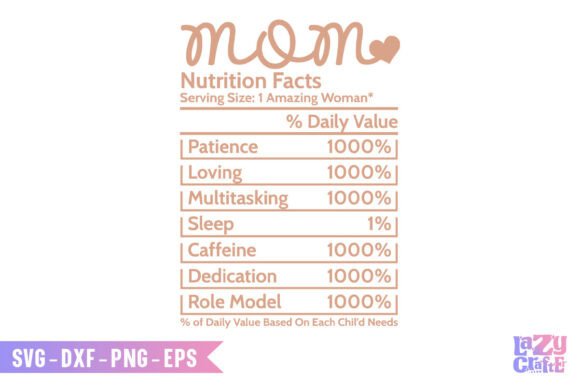
There are sentimental designs, and then there are the ones that feel like a warm hug in thread. The Mom Nutrition Facts Svg lands squarely in that second category. When I first opened the file, I immediately recognized the familiar layout of a nutrition facts label—the bold black outlines, the serving size joke, the list of ingredients that cleverly swaps out calories and fat for phrases like “unconditional love,” “endless patience,” and “a dash of sass.” It’s a concept that has been floating around the crafting world for years, but what struck me was how this particular version balanced readability with a playful, almost vintage-label personality. The mood is genuine, a little cheeky, and entirely giftable. As an embroidery designer, I’m always looking for designs that feel personal without being overly complicated, and this one hits that sweet spot. The typography is clean, the layout is structured, and the small decorative touches—like the barcode area or the tiny heart near the “Mom” heading—give it a finished, intentional look. It’s not just a text block; it’s a design asset that tells a story. That kind of visual personality is pure gold when you’re trying to create a handmade product that feels boutique-quality.
How It Translates to Thread and Fabric
Now, an SVG is a starting point. The real magic happens when you bring it into your embroidery software and start thinking about how each line plays out in thread. The Mom Nutrition Facts Svg is primarily line-based and text-heavy, which means your digitizing decisions will make or break the final look. The main text is bold enough to hold up well as a satin stitch or a light fill stitch, but the smaller ingredient lines need careful attention. I recommend bumping up the smallest text to at least 4mm in height, especially if you plan to stitch on anything with texture. The ingredient list is the heart of the design, and if those letters turn into a blurry mess, you lose the whole joke. So I always test the design on a scrap of the same fabric I’ll use for the final product, trying two or three different thread colors to see how the contrast lands. Dark thread on light fabric gives a crisp, graphic look; light thread on a dark tote bag can feel softer but may lose definition if the stitch density isn’t dialed in. The frame around the nutrition facts panel is a nice touch because it gives the embroidery a finished edge, almost like a patch. That line can be a simple running stitch or a triple stitch for a bolder outline. I’ve found that using a slightly heavier stabilizer—like a medium-weight cutaway—keeps the rectangular shape from warping, especially on stretchy fabrics. The design’s boxy structure is actually a plus for embroidery; it holds its own on a flat surface and doesn’t fight the hoop.
The Best Projects for This Design
This design has a natural home on a whole range of handmade product ideas. Kitchen towels are an obvious match—imagine a crisp white flour sack towel with the nutrition facts stitched in warm red or charcoal thread. It’s a gift that feels both personal and practical, ideal for Mother’s Day or a birthday. But I’ve also seen it shine on canvas tote bags, where the larger surface area gives the design room to breathe and makes the text easily readable. For a softer, more intimate feel, you could scale it down slightly and stitch it on a baby onesie or a tiny sweatshirt for a new mom, turning the nutrition facts into a cheeky nod to the real “ingredients” of motherhood. Custom apparel like a cozy pullover with the design placed over the heart is another favorite—it’s subtle enough to wear every day but meaningful enough to spark a conversation. If you’re a craft business owner, this design works beautifully as an embroidered patch attached to a jean jacket or a cap. Because the layout is rectangular and self-contained, it lends itself perfectly to patch making. Just finish the edges with a tight satin stitch and you’ve got a boutique accessory that customers will immediately understand. The design’s universal appeal also makes it a strong candidate for holiday gift sets, wedding gifts for the mother of the bride, or even a sweet addition to a nursery decor sampler.
When to Use Extra Caution
Not every embroidery project is a perfect fit for a text-heavy, detailed design like the Mom Nutrition Facts Svg. I always pause before putting it on thin, drapey fabrics like rayon or lightweight jersey. Those materials can pucker around dense lettering, and the small text may practically disappear into the weave. If you do go that route, use a water-soluble topper to keep the stitches from sinking and hoop the fabric with a sturdy stabilizer—no float method shortcuts here. Curved surfaces like caps are trickier, too. The rectangular shape wants to lie flat, so when you force it onto a cap’s crown, the outer edges can distort. You can make it work by reducing the size and curving the text in your digitizing software, but that takes extra effort and skill. Also, be mindful of hoop size. The design looks best between 4 and 6 inches wide, which typically fits a 5x7 or 6x10 hoop. If you try to cram it into a 4x4 hoop, the smallest text will likely fail to stitch cleanly, and the whole design will feel cramped. Dark fabrics with dark thread are another avoidable headache. I’ve seen too many makers try to stitch a navy blue design on a black sweatshirt, and the result reads as a smudge. Always test your thread color on a swatch first, and if you’re in doubt, go for high contrast. Finally, since this is a digital download in SVG format, remember that it’s not directly an embroidery file. You or your digitizer will need to convert it, and the quality of that conversion determines everything. Never assume the default auto-digitizing will handle the tiny details well—manual digitizing with attention to stitch direction and pull compensation is what gives you a professional finished product.
Real-World Case: A Custom Tote for Mom
Let me walk you through a real project I tackled recently. A client wanted a set of three personalized tote bags for her mother and two sisters, all with a similar theme but different colors. I immediately thought of the Mom Nutrition Facts Svg because it’s personal without being overly specific, and it can be quickly customized with a name or a date. I chose a mid-weight canvas tote in natural cream. After unzipping the download folder—the instructions are spot on: just right-click, extract all, and you’re set—I imported the SVG into my digitizing software. I grouped the text layers, increased the smallest font size slightly, and assigned a gentle satin stitch to the bold headings. The ingredient list I kept as a light fill stitch with a slight underlay, which gave the letters a plush, slightly raised feel. For the barcode area, I used a tiny running stitch to keep the detail without adding bulk. I stitched the design in a deep burgundy thread, and the cream background made it pop beautifully. The first test on scrap fabric showed a tiny bit of pull on the left side of the box, so I added a second layer of cutaway stabilizer and shifted the hoop tension slightly. The final tote looked like a boutique item, and the client’s mother actually cried. That’s the kind of reaction you can expect when you get the details right. The design’s emotional weight is already there in the concept; your job as the embroiderer is just to deliver it cleanly.
Commercial Use and Small Shop Considerations
If you’re a craft business, an Etsy seller, or a maker who sells at weekend markets, the Mom Nutrition Facts Svg can be a quiet revenue driver. It’s a design that photographs well, which is crucial for online listings. I always recommend creating a printable mockup using the SVG and a realistic tote bag image to test how the final product will look before you even hoop up. The design’s crisp lines and humorous tone catch the eye in a thumbnail, and the emotional connection gets people to click. Because it’s a digital file, you can use it as a starting point for multiple products—tote bags, aprons, pillow covers, tea towels, and even unisex sweatshirts. The commercial viability is solid, but you must check the licensing terms that come with the purchase. The product description doesn’t spell out the license, and that’s something you absolutely need to confirm before you sell finished items. Some SVG sellers only allow personal use, while others offer a commercial license. A quick message to the shop owner can save you from trouble later. Also, remember that the design itself is a graphic asset, not a ready-to-stitch file. If you’re selling the digital embroidery file, you’d need to digitize it yourself and ensure you have the rights to resell that derivative work. For most small shop product lines, though, this design is a safe bet. It doesn’t rely on trends that will fade, and the “Mom” theme is perennially strong.
Designer’s Notes for a Flawless Stitch-Out
Over the years, I’ve learned that a great design is only half the battle. The rest is all in the prep. For this embroidery project, here’s my usual checklist:
- Test the design on a scrap of the exact fabric you’ll use for the final product. Don’t skip this step even if you’re in a hurry.
- Check thread color contrast in both natural light and dim indoor lighting. What looks fine in your studio might wash out on a cloudy day.
- Review the stitch density of the small text. If your software shows the stitches too close, adjust the pull compensation or reduce the density slightly to avoid bulletproof patches.
- Confirm your hoop size can accommodate the design at the scale you want. A 4x4 hoop is too small for the full detail; aim for 5x7 or larger.
- Inspect the design in a black-and-white mockup. This strips away the color and shows you if the layout still reads clearly. If the “ingredients” blur into a gray blob, you need to tweak the digitizing.
- Compare how the design looks on light fabric versus dark fabric. A white-on-navy version can be stunning, but the text might need to be slightly bolder to hold its own.
- Use the right stabilizer. For most woven fabrics, a medium-weight cutaway is your friend. For knits, add a piece of no-show mesh on the back to prevent stretching.
- If you plan to use it as a patch, finish the outer edge with a dense satin stitch and include a placement line in your file so you can trim perfectly.
- Always keep the original SVG in a safe folder, and document your digitizing settings. That way, if you need to recreate the exact same look months later, you’re not starting from scratch.
Why This Design Works So Well
The Mom Nutrition Facts Svg succeeds because it rides a line between heartfelt and humorous. It’s not overly sentimental, so it appeals to a broad audience—from the sentimental mom to the one who would rather laugh than cry. In terms of embroidery, the structured layout is a big advantage. Rectangular designs with a clear border are easier to position and hoop, and they look intentional on a wide range of products. The “nutrition facts” concept is also instantly recognizable, which means the buyer doesn’t need a long explanation. That instant recognition increases buyer engagement and reduces the mental friction of a purchase. As a maker, you can lean into that by showcasing the finished product in a straightforward, well-lit photograph. Let the stitching speak for itself. The design’s simplicity also means it can be dressed up with a decorative frame, a floral accent, or even a monogram added to the corner without losing its identity. It’s a strong foundation, and that’s exactly what you want from a digital embroidery file you’re investing your time in.
A Few Thoughts on the Digital Download
The product page is refreshingly straightforward: an instant download SVG that you unzip and use. The extraction process is basic—right-click the folder, select “Extract All,” and you’re in. No special software for the unzipping part, which is a relief. The file itself is a vector graphic, so you can resize it without losing quality. That’s a huge plus for embroidery, because you can scale the design to fit anything from a pocket patch to a full back piece on a jacket. The one thing missing from the description is the exact file format beyond SVG. If you need a DST, PES, or EXP file, you’ll have to digitize or convert it yourself. The seller doesn’t mention multiple formats, so I’d assume it’s an SVG only. That’s not a flaw—many crafters use SVG as their primary format for cutting machines and then digitize from there. But if you’re new to embroidery, don’t expect a stitch-ready file. The Crafts category and Graphics type tell you it’s a visual design asset, not a machine embroidery file. That’s a critical distinction. I’d also recommend checking the design’s actual scale when you open it. Sometimes SVGs are created at a very large canvas size, and you’ll need to shrink it to embroidery-friendly dimensions. A quick glance at the virtual ruler in your software will tell you if the smallest text is still legible at your target size.
Final Thoughts for the Maker Who Cares About Details
After working with the Mom Nutrition Facts Svg on several projects, I can say it’s a design that rewards patience. The concept is charming, the layout is clean, and the emotional payoff is high. It’s not a design you throw onto a cheap fabric and rush—it’s one you take your time with, because the tiny text and the box structure demand a little extra care. But when you get it right, the result is a product that feels like a gift even before you wrap it. Whether you’re stitching a single tote for your own mother or building a whole collection of mom-themed apparel for your shop, this design earns its place in your creative library. Test it, tweak it, and trust your eye. The best embroidery isn’t just about the design; it’s about the thoughtfulness you stitch into every piece. And this SVG gives you a beautiful starting point for exactly that.